Learning French?... It’s easy!

On the occasion of World Teachers' Day (October 5), we meet A., a FLE (French as a Foreign Language) teacher in Geneva at a language school unlike any other: ASC Languages. Here, people don't just come to learn a language, but also to find their place, secure employment, understand Swiss society... and sometimes, to rebuild their lives.
This passionate teacher enthusiastically shares her experience in this unique context, where French becomes a powerful tool for integration.
She is convinced: learning French is easy when the right conditions are met.
You teach French to people on social and/or professional integration paths. Does this context change the way you teach?
A.: Yes, completely. We teach everyday French—useful and concrete. We talk about appointments with the Professional Integration Service, making doctor's appointments, children's schooling, or filling out forms. Every word taught has immediate utility. We see the direct impact of learning on the students' lives, and that motivates them enormously. When you realize that language becomes a bridge to autonomy, you invest more and understand that French is easy!
And how do the students react to the French language? Some come from very far away, with backgrounds that are sometimes very heavy, even very painful...
A.: It’s true. Many have experienced complex, sometimes traumatic migration journeys. But French quickly becomes a landmark, a key. The students are incredibly motivated and resilient. We build bridges of trust and kindness. And very quickly, they dare to speak, to express themselves, and to tell their stories. Progress is sometimes lightning-fast. We see people regain their self-confidence thanks to a few well-pronounced sentences. It’s very moving. Thanks to this acquired confidence, French is easier!
Yet, some aspects of French can seem discouraging... grammar, conjugation, agreements...
A.: Yes, but it all depends on how you approach them. In our school, we do a lot of oral work, role-playing, and simulations. We learn through action, through mistakes, often through laughter, and always with a smile. The students support and help each other. The goal is not perfection, but communication. And when you hear a student say proudly, "I found an internship," or "I had an interview," you tell yourself it was worth every little effort and that ultimately... French is easy!
And the pronunciation? It’s not always simple, especially for those who are not familiar with Latin sounds...
A.: We work extensively with many different materials. And we take the pressure off! We laugh a lot in class. We mime, we exaggerate, we sometimes sing. These are lighthearted moments that create bonds and help students tame the language. Regardless of the accent or the mistakes, the important thing is to speak, to dare. And the more you dare, the more you progress. With boldness, French is much easier!
In a few words, why is learning French here in Geneva an opportunity?
A.: Because Geneva is a multicultural city, full of opportunities, but where the language remains an essential key. In our language school, we learn French to find a job, to understand one's rights, to support children at school, and to participate in civic life. It is concrete, living, and necessary. And with good guidance, kindness, a lot of pleasure, and a little confidence... French is truly easy!
October 5th
is World Teachers' Day!
World Teachers' Day?
Every year on October 5th, World Teachers' Day celebrates those who make education a reality. It is the perfect opportunity to highlight the importance of teachers internationally, as well as the challenges of this essential profession.
This day reminds us of the importance of ensuring quality education for all, highlighting the challenges faced by teachers and recognizing their invaluable contribution to education and the country's development, both culturally and economically.
The ideal teacher?
The portrait of the ideal language teacher is defined by complementary human and professional qualities. They are simultaneously a linguistic expert, a passionate communicator, and a pedagogue attentive to the individual needs of each learner. To implement quality language teaching for migrants, language trainers in the field of integration also require multiple subject-specific, methodological, and social skills.
Key qualities of a language teacher?
- Language Mastery: The teacher must possess an excellent command of the language taught, both in terms of grammar and cultural and linguistic nuances.
- Effective Communication: They must be comfortable explaining complex concepts clearly and accessibly, while creating a climate of trust and encouragement.
- Adapted Pedagogy: They must be able to adapt their teaching methods to the different learning styles and profiles of the students, as well as to their language level.
- Patience and Empathy: The teacher must demonstrate patience and empathy toward learners, encouraging them to persevere even when faced with difficulties.
- Creativity and Dynamism: They must make language learning interesting and motivating by offering varied and stimulating activities.
- Passion for Teaching: They must be passionate about the language being taught and about helping others learn it.
- Organizational Skills: They must organize their lessons in a clear and structured manner, using appropriate tools and pedagogical materials.
- Open-mindedness: They must be open to different cultures and perspectives, encouraging students to develop their intellectual curiosity.
In summary, the ideal language teacher is a guide who accompanies each learner on their journey of linguistic development, while creating a stimulating and positive learning environment.
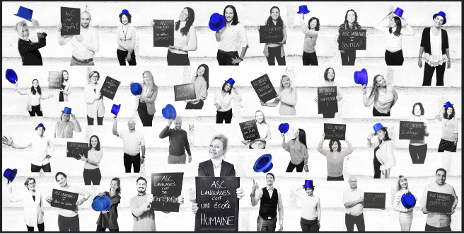
“To teach is to guide, inspire, and unlock potential, to build confidence and open new perspectives”
ASC Languages Geneva

Explore
Support
Language courses
Corporate policy
